What 'agents' actually means in Claude Code
'Agent' means at least four different things in Claude Code. Sorting them — and the subagent-vs-skill boundary — is the key to building a maintainable workflow.
// key takeaways
- ›The word agent is overloaded: the agentic CLI, subagents, agent teams, and the Agent SDK are four distinct layers.
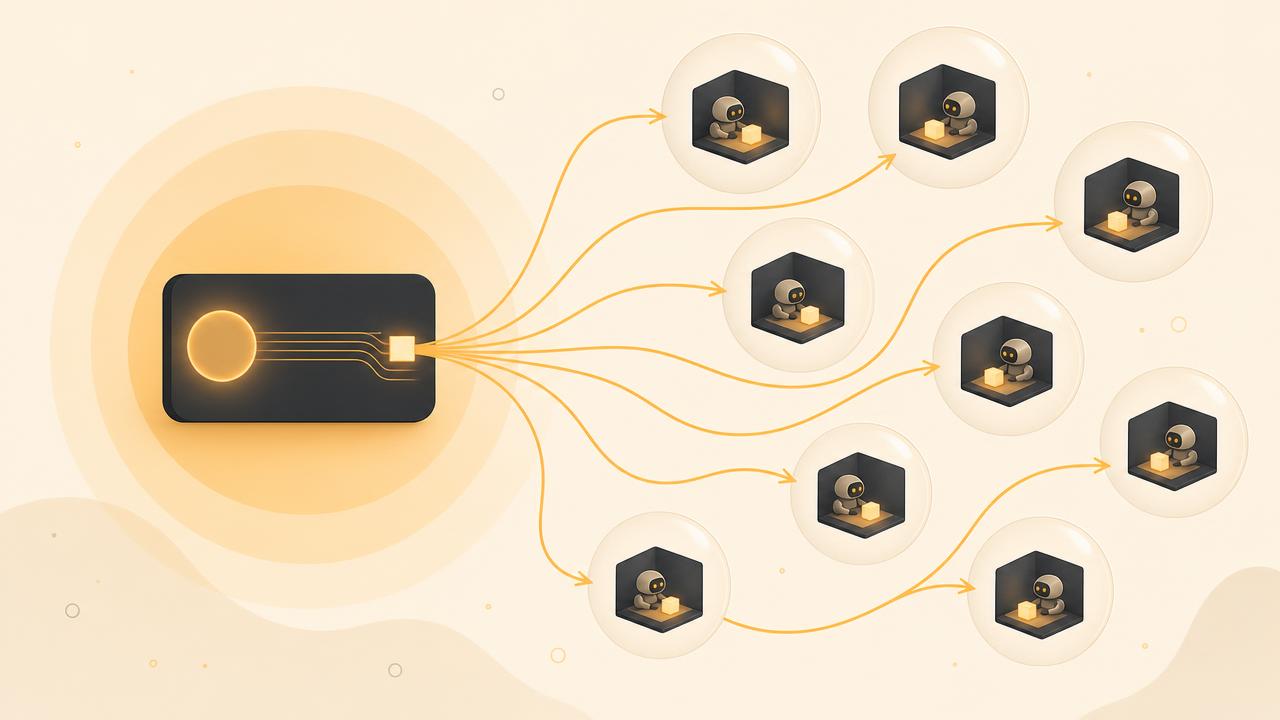
- ›A subagent runs in its own context window with its own system prompt, tools, and permissions — not inside your main thread.
- ›A skill changes what Claude knows; a subagent changes who does the work, where, and with what tools.
- ›The description field is the routing interface — write it behaviourally, not as an identity.
- ›Agent teams are a separate multi-session layer, not "more subagents" — and they're experimental by default.
On this page
The short answer
Most practitioners think a Claude Code "agent" is "a skill with extra steps." That mental model is wrong in a useful way.
A skill loads instructions into your current conversation. A subagent runs in its own context window, with its own system prompt, its own tool access, and its own permissions, then hands back a result. Where the work happens — and where the tokens are consumed — is the difference that matters.
But "agents" in Claude Code means at least four things, and conflating them makes the feature hard to reason about.
The four meanings of "agent"
- Claude Code itself is an agentic environment. The CLI already has tools, an execution loop, and the ability to plan and act across steps. It's agentic before you configure anything.
- Subagents are the custom in-product primitive. When someone says "I'm building an agent," they almost always mean a subagent: a specialized assistant that runs in its own context window with a custom system prompt, specific tool access, and independent permissions.
- Agent teams are a separate, multi-session layer. Subagents work within a single session; agent teams coordinate across separate sessions. Teams are independent Claude Code instances that communicate via a shared task list and peer messaging. They're experimental, disabled by default, and require an environment flag.
- The Claude Agent SDK is the same tools and agent loop exposed as a programmable library, outside the CLI.
This post is about layer 2 — subagents.
Why subagents exist: context management
The primary reason is finite context. Every tool call, every file read, every partial analysis lands in the window and stays there. As a session grows, it fills with intermediate work — noise that degrades performance (call it context rot).
A subagent changes the shape of that problem. Ask it to investigate why a test suite is failing: it reads 20 files, greps for error patterns, checks config — all in its own window. Your main thread gets back a clean summary, not the search. The official docs put it directly: subagent work doesn't consume your main context.
Three secondary reasons:
- Specialization — a focused reviewer with your team's standards in its own system prompt is more reliable than a general assistant holding standards alongside everything else.
- Constraint enforcement — you specify exactly which tools a subagent can use. A read-only research agent that can't write files or run shell is a different risk profile from the main assistant.
- Cost control — subagents can run on a different model. Routing lightweight tasks to Haiku while the main session runs on Sonnet is a real cost handle.
Building a subagent
A subagent is a Markdown file with YAML frontmatter, in .claude/agents/ (project) or ~/.claude/agents/ (personal).
---
name: code-reviewer
description: Reviews code changes for quality, security, and best practices.
 Use proactively after any significant code change.
tools: Read, Glob, Grep
model: sonnet
---

You are a code reviewer. When invoked, read the changed files and provide
specific, actionable feedback. Focus on what matters. Flag security issues
first, then logic problems, then style.
The fields:
- name — unique identifier, lowercase, hyphens only.
- description — the most important field. Claude reads this to decide whether to delegate. Write it behaviourally: what the agent does and when to use it. "Use proactively" is a documented signal to activate without being asked.
- tools — restrict what the agent can reach.
disallowedToolsinherits the main toolset then removes specific tools. - model — route to
sonnet,opus,haiku, or a full model id. Omit to inherit the main session model. - Body — becomes the agent's system prompt. It receives this, the working directory, and nothing else from the main session.
This reviewer can read and search but cannot edit or run shell — a read-only reviewer can't accidentally modify what it's reviewing.
Agents vs skills: the boundary
Skills and subagents both live in .claude/, both use frontmatter, both are sets of instructions. The difference is where the work happens:
- A skill loads into your current conversation; its instructions and reference files become part of the active context. Claude follows them in the same thread, and every step accumulates in your main window.
- A subagent runs separately in its own context window and returns a result.
A sentence that captures it:
> A skill changes what Claude knows or how it should approach a workflow. > A subagent changes who is doing the work, in what context, and with what tools.
Concrete example: to enforce your team's review standards throughout a session, use a skill. To review 40 files in one pass without filling your main context, use a subagent.
Best practices
- The description is the routing interface. Claude reads descriptions to decide when to delegate — it does not read the body first. Write activation conditions, not identity. "You are an expert reviewer with 20 years of experience" belongs in the system prompt, not the description.
- Restrict tools deliberately. An agent that inherits all tools is one you can't reason about when it breaks. Grant only what the task needs. Tool restriction is both security and predictability.
- One task per agent. A single description for "reviews code, writes tests, updates docs, and handles deploys" routes inconsistently. Three narrow files beat one broad one. The community consensus — collections of 100+ narrow subagents — points the same way: many focused agents outperform one general-purpose one.
- Use
modelas a cost lever.haikuon routine agents cuts cost;opusjustifies itself on long, reasoning-heavy contexts. The default (inherit) applies the most powerful model to everything, which is often overkill.
A quick word on agent teams
Agent teams are independent Claude Code sessions coordinated across separate sessions via a shared task list and peer messaging. They're experimental, disabled by default, and consume significantly more tokens (each teammate has its own billed context window).
The practical signal: as long as your subagents report back to you and don't need to talk to each other, you don't need agent teams. The moment one needs to hand off findings to another, that's when the upgrade earns its cost.
When subagents are the wrong tool
Anthropic's own guidance: find the simplest solution, and only increase complexity when needed.
Skip a subagent when:
- The task is one-off — the authoring overhead (naming, description, tools, testing, maintenance) only pays back for recurring workflows.
- Context isn't the problem — if the work is lightweight, a well-written prompt in the main session is faster and easier to debug.
- You're tempted by the monolith trap — one agent covering research, implementation, review, and docs is untestable and inconsistently selected.
Takeaway
Subagents are a context management tool and an execution boundary, not a capability upgrade. One agent, configured carefully — a focused description, a restricted tool set, a single clear job — is a reasonable afternoon's work. Complexity can grow from there, but it doesn't have to start there.
Primary sources: Claude Code docs on subagents and agent teams, and Anthropic's context-engineering guidance. Definitions and experimental status verified against official docs on 2026-08-07.
// related
Use /skill-doctor to trim Claude Code skill context safely
A practical, reversible workflow for using Claude Code's /skill-doctor report to find unused skill listings, reduce context overhead, and keep the skills that earn their place.
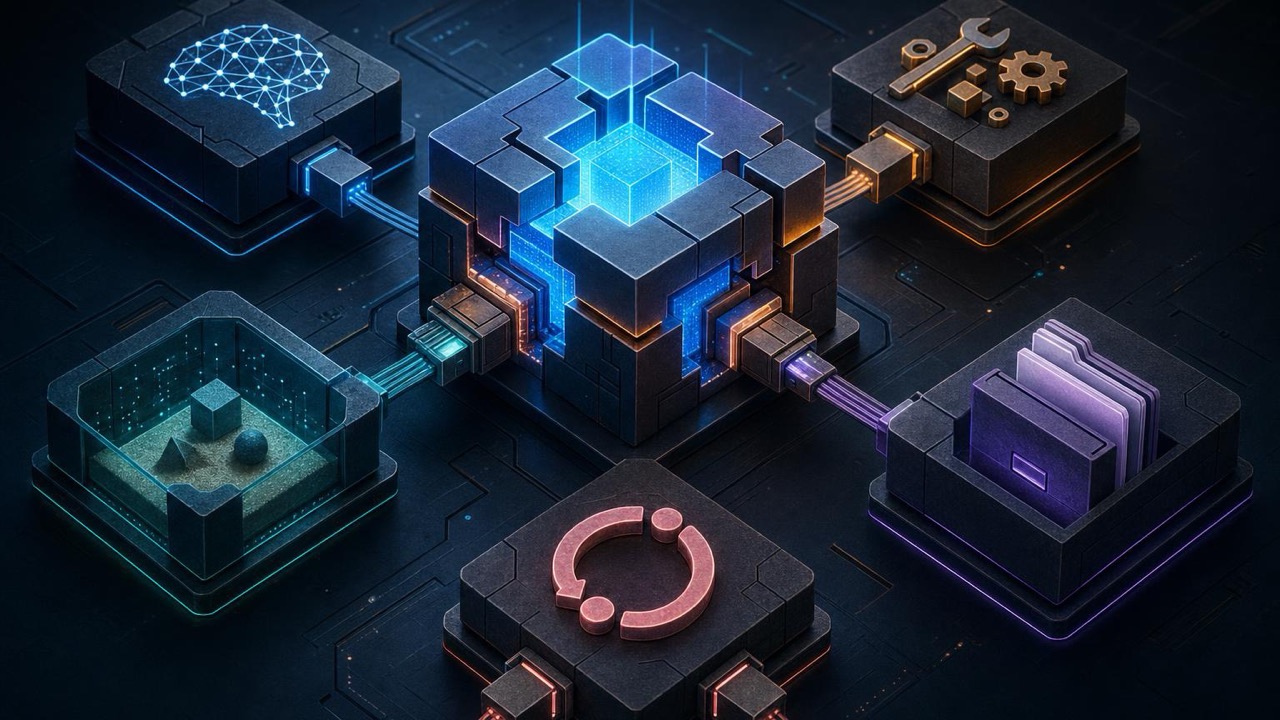
DeepSeek Harness vs Claude Code: the real advantage is replaceable parts
DeepSeek Harness is a developer-preview coding agent whose model, tools, sandbox, and loop are plugins. That makes it a useful experiment—not yet a drop-in Claude Code replacement.
Five Graphify alternatives for Claude Code: pick the right context tool
CodeGraph, GitNexus, Repomix, Serena, and grepai solve different parts of Claude Code's codebase-context problem. This guide helps you choose without installing five overlapping tools.