MCP 2026-07-28: the stateless core and why it changes servers
The Model Context Protocol moved to a stateless core with request/response semantics. Here's what changed in the 2026-07-28 spec and why it makes MCP servers deployable anywhere, including serverless.
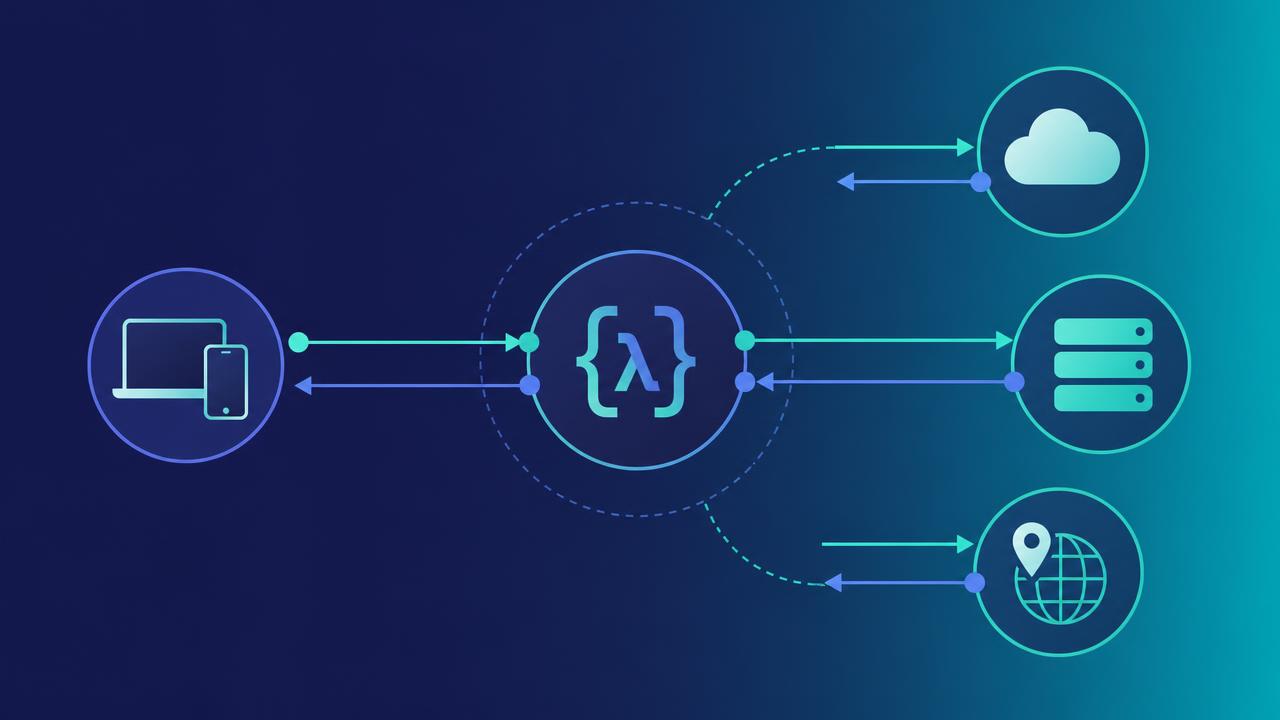
// key takeaways
- ›The MCP 2026-07-28 spec moves the protocol from a bidirectional stateful model to a stateless request/response core.
- ›A stateless server can run on serverless, edge, and ordinary load-balanced HTTP — no persistent session to manage.
- ›Standardized extensions (MCP Apps, Tasks) and hardened auth ship with the same release.
- ›It's the shift that makes building and connecting agentic experiences at enterprise scale materially easier.
- ›MCP surpassed 400M monthly SDK downloads, a 4x increase this year, per Anthropic.
On this page
The short answer
The Model Context Protocol 2026-07-28 spec is one of the most significant MCP releases to date, and its headline is a stateless core.
MCP moves from a bidirectional, stateful protocol to a request/response model. That single change ripples through everything: servers no longer need to hold a persistent session, which makes them deployable on serverless, edge, and standard load-balanced HTTP infrastructure instead of only long-lived processes.
What actually changed
- Stateless core. The protocol drops the concept of a maintained session between client and server. Each request is self-contained and answered on its own — closer to how HTTP works than to a stateful duplex connection.
- Extensions framework. The same release introduces standardized extensions including MCP Apps and Tasks, plus hardened auth.
- Enterprise leverage. Anthropic frames the value as letting teams "build and connect agentic experiences at enterprise scale" — an explicit nod to how much simpler stateless deployments are to operate.
Why stateless matters for server builders
If you build MCP servers, the stateful model was the awkward part: you had to keep a long-running process alive, manage session lifecycle, and handle reconnects. Stateless removes that burden.
A stateless server is just an HTTP endpoint that answers tool calls. That means:
- It runs on serverless functions (scale to zero, no idle process cost).
- It runs on edge and load-balanced HTTP infrastructure with no session-affinity concerns.
- It's trivially replicable and horizontally scalable — any instance can answer any request.
This is the infrastructure shift that lets AI agents connect to tools the same way web apps connect to APIs.
Context: the protocol is already everywhere
The stateless change lands on a protocol that's already the industry standard for connecting agents to tools and data. Anthropic reports MCP surpassed 400M monthly SDK downloads — a 4x increase this year — with Microsoft, Google, and a growing roster of vendors shipping MCP compatibility.
So the practical takeaway isn't "learn a niche protocol." It's: the default way agents reach external systems just got a lot cheaper and easier to run.
The parallel move: graph engineering
The stateless shift pairs with a broader change in how agentic systems are built. The same period has seen a move from loop engineering (everything inside one context window) toward graph engineering — where subagents act as nodes, an orchestrator coordinates them, and shared state lives outside any single window.
MCP's stateless core supports this direction: if servers are stateless endpoints, graphical, parallel, fan-out architectures become much easier to wire up.
Takeaway
The 2026-07-28 spec is a quiet but load-bearing change: MCP servers no longer have to be stateful processes. If you've been putting off building an MCP server because persistent session management felt heavy, that reason is gone. A stateless tool endpoint is now a modest HTTP service you can host almost anywhere — the same model that made modern web APIs trivial to operate.
Primary source: Bringing MCP 2026-07-28 to Claude (Claude/Anthropic). Stateless core, extensions, auth, and the 400M download figure verified against that post on 2026-08-08. The "graph engineering" framing derives from community commentary, flagged as interpretation, not an Anthropic claim.
// related
MCP in Claude Code: the complete mental model
A practical guide to MCP in Claude Code: what the protocol is, how it connects Claude to external tools and data, how it differs from skills, and how the stateless 2026-07-28 spec changes server building.
Five Graphify alternatives for Claude Code: pick the right context tool
CodeGraph, GitNexus, Repomix, Serena, and grepai solve different parts of Claude Code's codebase-context problem. This guide helps you choose without installing five overlapping tools.

Harness engineering: what actually makes Claude Code work
Claude Code's success isn't better prompts — it's the harness around the model: a streaming agent loop, a typed tool registry, and a context management layer. Here's the reproducible thesis.