Claude Code /design: prototype the interface before you build it
The /design preview changes the first step of a UI task from coding to exploring visual directions. Here is a cautious workflow for evaluating the output before implementation.
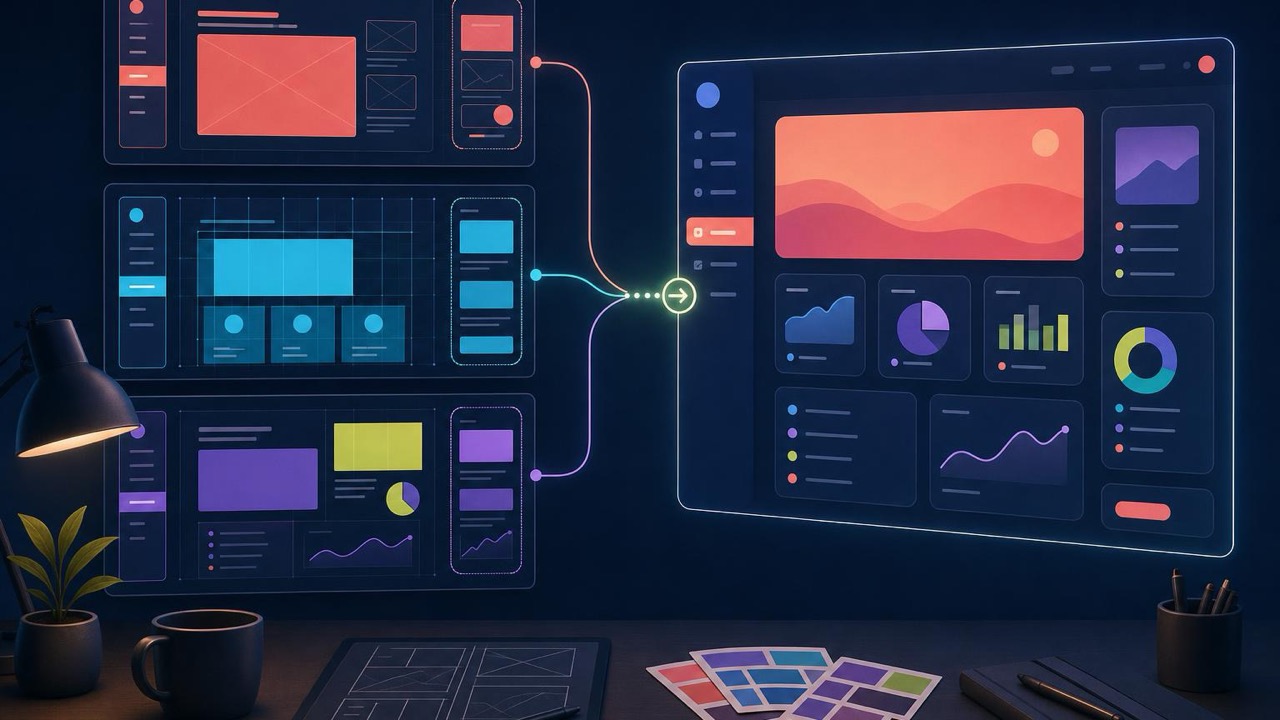
// key takeaways
- ›The /design command is an early-preview workflow for generating shareable interface directions before implementation.
- ›Update Claude Code first; the reported preview requires at least v2.1.234, but check your installed release before relying on it.
- ›Treat generated artboards as a design conversation, not production-ready UX or code.
- ›Compare directions against content, accessibility, responsive behavior, and existing product tokens before choosing one.
- ›Keep the selected direction as a brief, then implement it in a separate coding pass.
On this page
The short answer
The new /design workflow is useful because it inserts an exploration step before Claude writes components. Instead of opening with “build me a dashboard,” you describe the interface and review several visual directions first.
That is a better default for ambiguous UI work. The expensive mistake is often not bad JSX; it is committing to the first plausible layout before anyone has compared alternatives. The preview is still early, and the public commands reference may not list every gated or account-specific command, so verify availability locally before documenting it as a stable team dependency.
Start with the smallest prompt
Check the installed version first; update only if the preview is unavailable:
claude --version
# If needed:
claude update
Then describe the user, task, content, and constraints—not a pile of CSS instructions. For example:
/design Create a mobile-first reading dashboard for saved technical articles. Show unread count, filters, article cards, and a clear empty state. Use our existing dark theme and make keyboard focus visible.
The useful output is not a final screenshot. It is a set of competing directions you can compare: density, hierarchy, navigation, and how much of the screen is devoted to the primary task.
A review loop that prevents pretty dead ends
Review each direction against four concrete questions:
- Can the user complete the main task without explanation? If the answer depends on decorative affordances, reject it.
- Does the content fit? Test real titles, long labels, empty states, errors, and loading states—not placeholder copy.
- Does it survive responsive and accessibility constraints? Check keyboard order, focus visibility, contrast, reduced motion, and narrow screens.
- Can the existing system support it? Compare spacing, typography, color tokens, and components before inventing new patterns.
Keep a short decision record explaining why a direction won instead of copying an artboard into the repository without its intent.
Where the preview stops
/design does not remove the need for product judgment. Generated directions can over-prioritize visual novelty, omit validation states, or imply interactions that are expensive on mobile. They also cannot know your analytics, legal requirements, content model, or established design language unless you provide that context.
The clean handoff is a compact brief: selected direction, rejected alternatives, target users, real content examples, responsive rules, accessibility requirements, and the components that must be reused. Start a fresh implementation prompt from that brief. Separating exploration from coding keeps the model from defending its first visual idea while it writes the first component.
Verdict
Use /design when the problem is what should this interface be? Use the normal coding workflow when the design decision is already made. The command is most valuable as a forcing function: compare multiple directions, test them against real constraints, then write code with a decision you can explain.
This article describes an early preview and intentionally avoids treating it as a stable command guarantee. Claude Code's official command reference and changelog remain the source of truth for availability and version behavior, checked on 2026-08-20.
// related

DeepSeek Harness vs Claude Code: the real advantage is replaceable parts
DeepSeek Harness is a developer-preview coding agent whose model, tools, sandbox, and loop are plugins. That makes it a useful experiment—not yet a drop-in Claude Code replacement.

Five Graphify alternatives for Claude Code: pick the right context tool
CodeGraph, GitNexus, Repomix, Serena, and grepai solve different parts of Claude Code's codebase-context problem. This guide helps you choose without installing five overlapping tools.

Superpowers for Claude Code: the workflow behind the hype
Superpowers turns Claude Code into a design-first, test-driven workflow using composable skills, worktrees, subagents, and review gates.